Mastercard Study Finds Digital Payment Demand Outpaces Acceptance in Puerto Rico
August 19, 2026 | San Juan, Puerto RicoEighty-eight percent of survey respondents want more establishments or people to accept digital payments, while 58% use cash at least monthly when they would prefer to pay digitally.
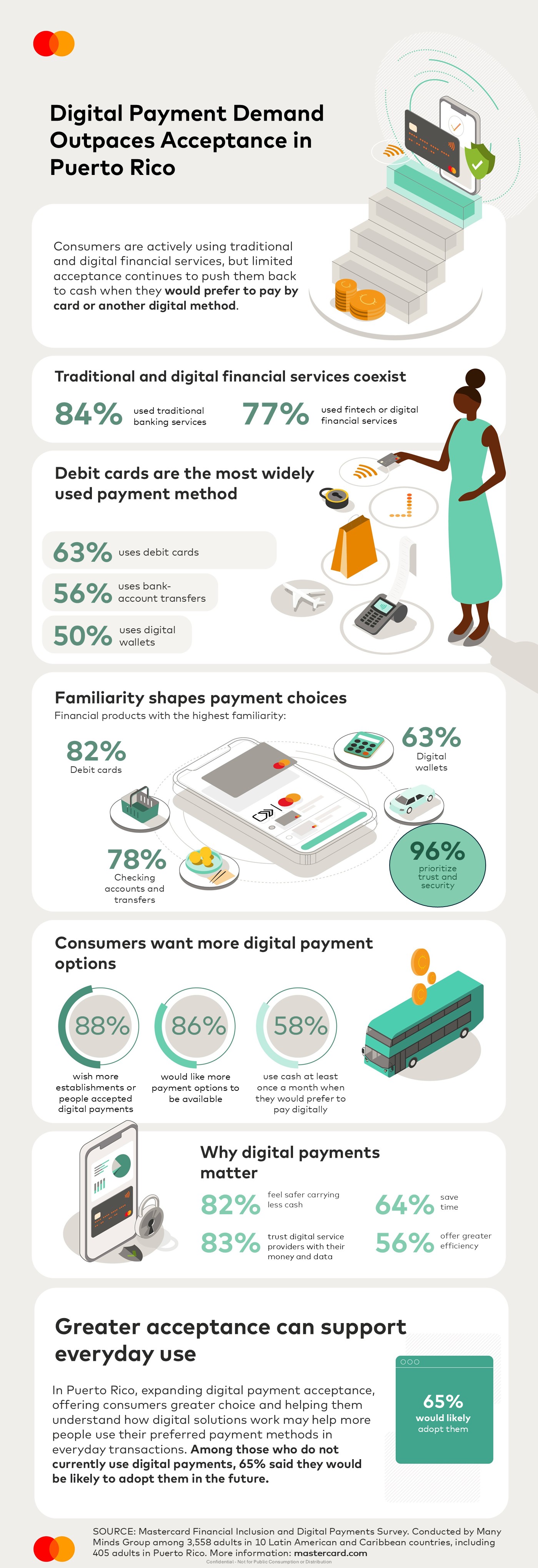
Consumers in Puerto Rico are actively using traditional and digital financial services, but limited acceptance and payment choice continue to push them back to cash. According to Mastercard’s latest study on the State of Digitization and Financial Inclusion, 88% of survey respondents wish more establishments or people accepted digital payments, and 58% use cash at least once a month when they would prefer to pay by card or another digital method.
The findings point to an opportunity to expand digital payment acceptance, offer consumers greater choice and build understanding of emerging solutions. Among survey respondents who reported having a bank account, 84% had used traditional banking services and 77% had used fintech or digital financial services in the six months preceding the survey.
Debit cards were the most widely used payment method, at 63%, followed by bank-account transfers at 56% and digital wallets at 50%. The results suggest that established methods continue to benefit from broad familiarity and acceptance, while greater awareness and acceptance could support wider use of newer solutions.
“The data is encouraging: consumers in Puerto Rico are active across traditional and digital channels. It also shows that consistent everyday use depends on whether people understand a payment method and can use it where they need to,” said Pablo Cuarón, Country Manager, Puerto Rico, Mastercard. “Our focus is on expanding digital acceptance, increasing payment choice and helping consumers understand the solutions available to them.”
Familiarity and trust shape payment choices
Survey respondents reported high familiarity with established financial products, while awareness of newer solutions was lower. This difference may influence how confidently consumers evaluate and use emerging payment options.
Among survey respondents, 82% were familiar with debit cards, 78% with checking accounts and transfers, and 75% with savings accounts. Awareness of emerging solutions was lower: 63% were familiar with digital wallets, 26% with “Buy Now, Pay Later” services and 16% with cryptocurrency wallets.
Trust, security and understanding also emerged as important considerations when choosing a payment method. Ninety-six percent of respondents prioritized trust and security, while 93% said understanding how a payment method works was important. In addition, 83% said they trusted digital service providers with their money and data, and 82% said they felt safer carrying less cash.
The findings indicate that familiarity, trust and understanding can support consumers as they evaluate newer payment methods. Clear information about how these solutions work, together with confidence in the institutions behind them, may help encourage broader adoption.
Where Puerto Ricans want to pay digitally—but can’t
Among digital-payment users, the most frequently cited benefits are time savings, at 64%; efficiency, at 56%; and convenience, at 44%.
At the same time, an acceptance gap persists: consumers cannot always use their preferred payment method.
-
Eighty-eight percent wish more establishments or people accepted digital payments, indicating broad interest in greater acceptance.
-
Eighty-six percent would like more payment options to be available, underscoring consumers’ interest in choosing the method that best fits each transaction.
-
Fifty-eight percent use cash at least once a month when they would prefer to pay by card or another digital method, suggesting that limited acceptance can influence how consumers pay.
Six percent of respondents said they do not currently use digital payments; among this group, 65% said they would be likely to adopt them in the future. Clearer information about consumer protections and how digital payments work, along with broader payment options, could help encourage adoption.
“These findings show that consumers in Puerto Rico are interested in using digital payments but still encounter barriers,” added Cuarón. “We are working with merchants to expand digital acceptance, supporting financial institutions as they broaden payment solutions, and collaborating across sectors to help make digital payments a reliable and easy option for everyday transactions.”
In Puerto Rico, Mastercard is focused on expanding digital payment acceptance and choice, strengthening trust in digital solutions, and helping consumers understand emerging options. Through collaboration with financial institutions, businesses, government entities and community partners, the company aims to help more consumers use their preferred payment methods in everyday transactions.
Methodology
Data referenced in this release comes from a survey of 405 adults aged 18 and older in Puerto Rico. The Puerto Rico study was part of a broader Mastercard survey conducted across 10 countries in the region from February 11 to 26, 2026. The margin of error for the Puerto Rico sample is ±5 percentage points at the 95% confidence level. Subgroup findings based on fewer than 100 respondents should be interpreted directionally; these audiences are marked with an asterisk.
Media Contacts
About Mastercard
Mastercard powers economies and empowers people in 200+ countries and territories worldwide. Together with our customers, we’re building a sustainable economy where everyone can prosper. We support a wide range of digital payments choices, making transactions safe, simple, smart and accessible. Our technology and innovation, partnerships and networks combine to deliver a unique set of products and services that help people, businesses and governments realize their greatest potential.